DSK Services
- Home
- Services

How we help
Speech and Language Therapy
The Lifelong Importance of Speech and Language Therapy for People with Down Syndrome
Speech and Language Therapy (SLT) plays a vital role in supporting individuals with Down syndrome across every stage of life—from infancy through adulthood and into later years. Communication is central to connecting with others, learning, independence, and emotional wellbeing. For people with Down syndrome, SLT provides essential tools and strategies to help them reach their full communicative potential.
Infancy: Laying the Foundations
In the early years, SLT focuses on feeding skills and early interaction. Many babies with Down syndrome experience low muscle tone, which can affect feeding, swallowing, and later, speech clarity. Early intervention support parents with feeding techniques and begins building communication foundations by supporting the development of engagement, play skills and babbling.
Childhood: Building Language and Communication Skills
As children grow, SLT helps develop both understanding and use of language. Alternative and Augmentative Communication (AAC) strategies, such as picture-based supports or communication apps, may be introduced to support expressive communication. Lámh, a manual signing system used in Ireland, is often a powerful support for children with Down syndrome. It encourages communication while verbal speech is developing and helps reduce frustration.
Young Adulthood: Fostering Independence and Social Skills
In young adulthood, SLT continues to support speech clarity, vocabulary, and social communication skills, helping individuals express their needs, build relationships, and engage in education or employment. AAC and Lámh may still be useful tools, depending on individual needs. Therapy can also support problem-solving, understanding abstract language, and managing social situations.
Later Years: Adapting to Change
As people with Down syndrome age, they may experience changes in communication or memory. SLT can provide strategies to support comprehension, expression, and engagement in daily life. Feeding and swallowing support often becomes important again, particularly if age-related health issues arise.
Speech and Language Therapy is not a one-time intervention—it’s a dynamic, evolving support that adapts to the person’s needs at each stage of life. Whether through spoken words, Lámh, or AAC tools, the goal remains the same: to empower people with Down syndrome to connect, express themselves, and participate fully in their world.
SLT in Down Syndrome Kerry
Kerry SLT Clinic (www.kerryslt.ie) has been providing services to the member of DSK (from babies to adults) for a number of years. We are committed to deliver individualised approach through clinic or school based sessions. We also organise seasonal activities such as social skills training, school preparation groups, summer camps. There are seven SLTs currently working in the clinic.
If you are availing of SLT already and wish to discuss any clinical matter, first of all please contact your SLT directly. If you wish to contact Dominika (Clinical Director) or David (clinic Manager), please email info@kerryslt.ie.
For more information about SLT provision within Down Syndrome Kerry (including if you wish to start SLT) please Operations Manager Siobhán at siobhanwalsh@downsyndrome.ie
How we help
Parent Link
How we help
Employment Support
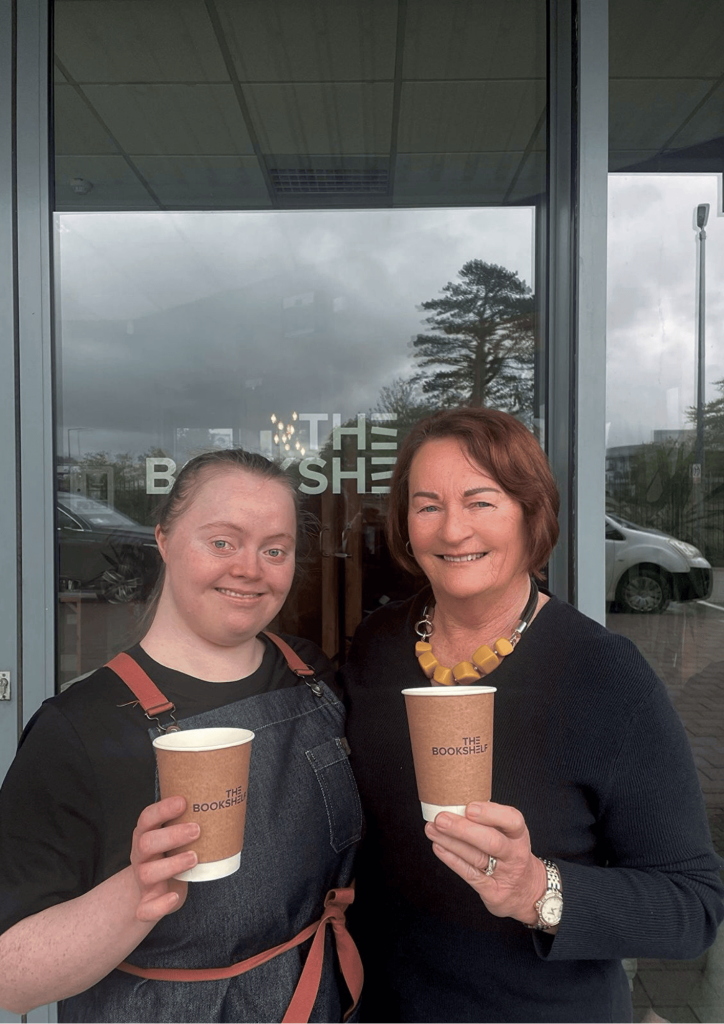
DSK provides training and support to adults with Down syndrome, both in and out of the workforce. This includes job readiness training, on-the-job support, soft skills development, and collaboration with employers, social care settings, and caregivers.
Our specialists help members build job-specific skills, independence, and confidence through tailored approaches like visual aids, task breakdown, repetition, and positive reinforcement.

How we help
Physiotherapy
Children with Ds can have shorter arms and legs which can cause difficulties with balance and movement. In addition there are sensory processing deficits in all the sensory systems as well as impaired ability to take in and register sensory input. Some children can present as clumsy, easily distracted, have poor listening and attention skills, seem to play” too rough” or dislike certain noises or textures and using a sensory integrative approach in physiotherapy is beneficial to these children.
Physiotherapy aims to address any developmental problems that arise, to improve muscle strength and to increase tone in order to help a child maximize their function. It also aims to prevent poor compensatory movement patterns that can cause problems later in life. The goal of Physiotherapy is to enable an individual to achieve maximal functional independence for improved quality of life regardless of a person’s age or ability. For further inquiries contact info@kerry.downsyndrome.ie.
How we help
Behavioural Therapy

How we help
Counselling
Contact DSK office on 0667103804.
Courses
Lámh

Courses
Numicon
• Communicating mathematically
• Exploring relationships
• Solving problems in everyday life experiences (generalising)
Please contact DSK office on 0667103804 for the next available courses